
Overview
In this section you will get an overview of the condition and its relevance to your health.
Premature ejaculation (ejaculatio praecox) is the most common sexual dysfunction in men. Approximately 20 to 30 percent of all men are affected at some point in their lives. Despite this, the topic is rarely discussed — many men suffer in silence, even though effective treatments are available today.
The good news: With modern therapeutic approaches, whether pharmacological or behavioral, the time to ejaculation can be significantly extended in most cases.
What is it?
Here you will learn what medically characterizes this condition and how it is defined.
Premature ejaculation is defined as orgasm regularly occurring earlier than desired — often within one to two minutes of penetration, sometimes even before. The key diagnostic criterion is not time alone but also the level of distress: if the rapid climax impairs sexual satisfaction or leads to relationship problems, it constitutes a treatable condition.
Medically, two forms are distinguished: Primary (lifelong) premature ejaculation has been present since the first sexual experiences. Genetic factors and a particular sensitivity often play a role here. Secondary (acquired) premature ejaculation develops later in life — frequently in connection with erectile problems, relationship stress, hyperthyroidism, or other conditions.
Causes
The following information explains which factors can contribute to the development of this condition.
The exact causes of premature ejaculation are not fully understood, but various factors play a role.
Biological factors: In the primary form, altered sensitivity of serotonin receptors in the brain appears to play an important role. Serotonin is a neurotransmitter that, among other things, inhibits the ejaculation reflex. In men with premature ejaculation, this mechanism may be less pronounced. Increased sensitivity of the glans may also contribute.
Psychological factors: Stress, anxiety, performance pressure, and relationship problems can exacerbate or trigger the problem. Some men learned during early sexual experiences to reach orgasm quickly — for example, out of fear of being caught — and are unable to break this pattern later.
Comorbidities: Acquired premature ejaculation can be related to erectile dysfunction: some men subconsciously try to reach orgasm quickly before the erection fades. Hyperthyroidism, prostatitis, or neurological conditions may also play a role.
Symptoms
This section describes the typical signs and symptoms you should watch for.
The main symptom is ejaculation that regularly occurs too early. In the primary form, the average time to orgasm is often less than one minute; in the secondary form, less than three minutes.
Affected men frequently report having no control over the timing of ejaculation. The feeling of having "no brakes on the way to orgasm" is typical. Some men ejaculate during foreplay or shortly after penetration.
The consequences extend beyond the purely physical: shame, frustration, and diminished self-esteem are common. Many affected men avoid sexual situations or develop relationship problems. Partners often suffer from the situation as well.
Diagnosis
Below you will learn how this condition is detected through medical examinations.
The diagnosis is primarily based on the medical history. The doctor will ask how long the problems have existed, in what situations they occur, and approximately how long it takes to reach ejaculation. Questions about erectile problems, the relationship situation, and general health are also part of the assessment.
A physical examination and laboratory tests can help rule out organic causes — such as hyperthyroidism or prostatitis.
For online treatment, a structured questionnaire allows an initial assessment of whether pharmacological therapy is appropriate.
Treatment
Here the available therapy options and their modes of action are explained.
Several effective treatment approaches are available today, often used in combination.
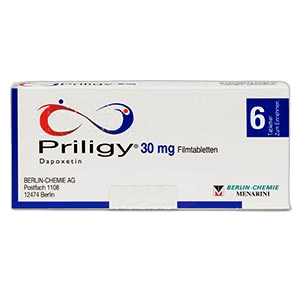
Dapoxetine is the only medication specifically approved in Germany for the treatment of premature ejaculation. It belongs to the group of selective serotonin reuptake inhibitors (SSRIs) but acts much more briefly than antidepressants in this class. Dapoxetine is taken one to three hours before planned intercourse and can extend the time to ejaculation by two to three times. Common side effects include nausea, headache, and dizziness.
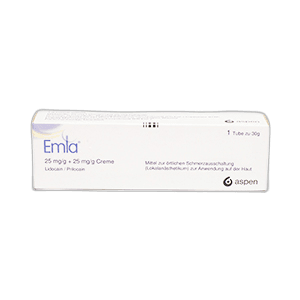
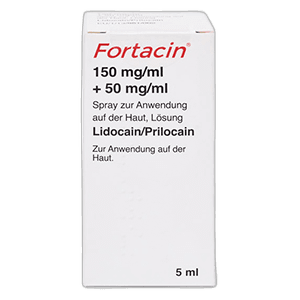
Topical anesthetics in the form of creams or sprays (containing lidocaine and/or prilocaine) reduce the sensitivity of the glans and can delay ejaculation. They are applied 10 to 20 minutes before intercourse. Important: Use a condom or thoroughly wash off the cream before sex to prevent transfer to the partner.
Behavioral techniques can help improve control in the long term. The best known are the start-stop technique (stimulation is paused when ejaculation approaches) and the squeeze technique (pressure on the glans to suppress the ejaculation reflex). These methods require practice and patience but can be very effective.
Psychotherapy or couples therapy may be beneficial when psychological factors play an important role or when the problem significantly affects the relationship.
Available medications
Various prescription medications are available for treatment. Click on a medication to learn more about its effects, dosage and side effects.
Prevention
This section provides guidance on prevention and reducing risk factors.
Not every case of premature ejaculation can be prevented. However, a conscious approach to stress and performance pressure can be helpful.
Open communication with a partner and early medical advice help reduce distress and break the vicious cycle of anxiety and failure.
Regular pelvic floor exercises can improve control over ejaculation in the long term.
FAQ
Here you will find answers to frequently asked questions on this topic.
Would you like a medical assessment?
Fill out the medical questionnaire. A licensed doctor will review your information and recommend a suitable therapy if appropriate.
Important notice
This content is for general information only. In case of severe pain, shortness of breath, impaired consciousness, fever > 39°C or rapidly worsening symptoms, please seek immediate medical help ().
Related treatments
More treatments from the Männergesundheit area that might interest you.
Erektionsstörungen
Beantworte ein paar kurze Fragen, damit wir einschätzen können, ob eine Behandlung medizinisch geeignet ist.
Haarausfall
Wir klären kurz die Ausgangslage und mögliche Ursachen, bevor passende Optionen angezeigt werden.
Testosteronmangel
Ein kurzer Check der wichtigsten Faktoren hilft, den nächsten sinnvollen Schritt einzuordnen.