
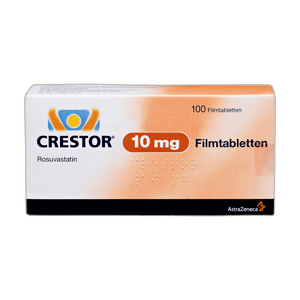
What is Rosuvastatin (Crestor®)?
Rosuvastatin is the most potent available statin and can reduce LDL cholesterol by up to 55%. It is sold under the brand name Crestor® and as a generic (e.g. Rosuvastatin-ratiopharm®, Rosuvastatin HEXAL®).
In contrast to Simvastatin and Atorvastatin, Rosuvastatin is mined only minimally via CYP enzymes, which leads to significantly less interaction with other drugs. It is a hydrophilic statin with a preferred absorption into the liver.
The JUPITER study showed that Rosuvastatin significantly reduces cardiovascular events even in patients with normal cholesterol but increased CRP (inflammation marker).
Active Ingredients & Mechanism of Action
Active ingredient: Rosuvastatin (als Calciumsalz)
Rosuvastatin particularly inhibits cholesterol biosynthesis:
Active mechanism:
- Potent inhibition of HMG-CoA reductase of all available statistics
- Low absorption in muscle cells (theoretically less muscle problems)
- Strong Compensatory LDL receptor high regulation
Lipid effect:
- LDL cholesterol: 40–55 % reduction (dose dependent)
- Triglycerides: 15–25 % reduction
- HDL cholesterol: 8–14 % increase
Special features:
- Minimal CYP3A4 metabolism → few interactions
- Mainly unaltered over the liver
- No influence on grapefruit juice
- Intake possible at any time of day
Initiation of action: Significant LDL reduction after 1–2 weeks. Maximum effect after 4 weeks.
Who is it suitable for?
Rosuvastatin is suitable for:
- Adults with primary hypercholesterolemia
- Patients with family hypercholesterinemia (strongly elevated LDL)
- Mixed dyslipidemia
- Primary and secondary prevention of cardiovascular events
- patients with increased hsCRP and cardiovascular risk
Especially recommended at:
- High LDL that needs to be greatly reduced (> 50 %)
- Many accompanying drugs (less interactions)
- If atorvastatin does not work enough
- Familiary hypercholesterolemia
Not suitable:
- Pregnancy and breastfeeding
- Active liver disease
- Heavy kidney failure (at 40 mg)
- Myopathy among stamina in prehistory
Available Dosages
Start dose:
- 5–10 mg once a day
Other dosages:
- 5 mg: start of therapy, especially in Asian patients or increased myopathy risk
- 10 mg: standard dose for most patients
- 20 mg: Stronger reduction required
- 40 mg: maximum dose, only with severe hypercholesterolemia under close-meshed control
Available starches:
- 5 mg, 10 mg, 20 mg, 40 mg film tablets
LDL reduction after dose:
- 5 mg: approx. 38 %
- 10 mg: approx. 43 %
- 20 mg: approx. 48 %
- 40 mg: approx. 53–55 %
Dosis adjustment:
- Heavy kidney failure: max. 20 mg (40 mg contraindicated)
- Asian patients: start with 5 mg (increased exposure)
How to Take
Intake:
- Once a day at any time
- Independent meals
- film tablet with water swallow
Advantages:
- No time retention (other than Simvastatin, which must be taken in the evening)
- No Grapefruit problem (other than Simvastatin and Atorvastatin)
Important notes:
- First laboratory control after 4–12 weeks
- Regular monitoring of liver values, lipid profile and kidney function
- For muscle pain or dark urine: Contact doctor
- thyroid function should be checked before the start of therapy
For forgotten dose: Take the next regular time. Don't take twice.
Contraindications
**Rosuvastatin must not be taken at:* *
- Active liver disease or unexplained transaminase increase
- Pregnancy and breastfeeding
- Heavy kidney failure (only with 40 mg contraindicated)
- Myopathy
- Simultaneous ciclosporin therapy (at all doses)
- hypersensitivity to Rosuvastatin
Preview at:
- Hypothyroidism
- Personal or family muscle disease
- Asian origin (increased plasma level)
- Kidney insufficiency (dose adjustment)
- High alcohol consumption
- Simultaneous fibrate intake
pregnant: Strikt contraindicated. Safe contraception required.
Possible Side Effects
Family (1–10 %):
- Headaches
- Squeeze
- Myalgia (muscle pain)
- Gastrointestinal complaints (ovenipation, nausea)
- Asthenie (smooth)
- Increased liver enzymes
- Diabetes mellitus (lightly increased risk, dose-dependent)
** Occasionally (0.1-1 %):* *
- Skin rash, Pruritus
- Increased CK values
- stomach pain
- Proteinuria (at high doses)
Selten:
- Myopathy, Rhabdomyolysis
- Pancreatitis
- Hepatitis
- Peripheral neuropathy
** In controlled studies, the myopathy rate at Rosuvastatin is comparable to other statistics. The hydrophilic profile protects against muscle cell absorption.
Interactions
Advantage of Rosuvastatin: Minimal CYP3A4 metabolism → significantly less interactions than simvastatin or atorvastatin.
Contraint with:
- Ciclosporin (all cans)
Dosis limit:
- Gemfibrozil: Rosuvastatin max. 20 mg
- Lopinavir/Ritonavir, Atazanavir/Ritonavir: Max. 10 mg
- Regorafenib: Careful
Preview at:
- Anticoagulants (Warfarin, Phenprocoumon) – Control INR
- Fibrates (myopathy risk)
- Fusidic acid – temporarily pause
No relevant interaction with:
- Grapefruit juice (no CYP3A4-substrate)
- Amiodaron, Verapamil, Diltiazem (no dose limitation required as with Simvastatin)
Frequently Asked Questions
Similar Medications
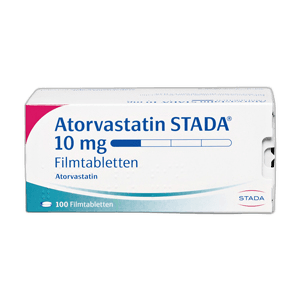
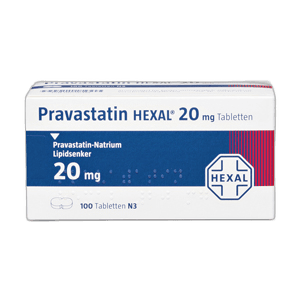
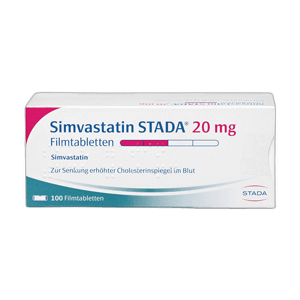
Is Rosuvastatin (Crestor®) right for you?
A licensed doctor will review your information and issue a prescription if suitable. Discreet and secure.
Important Notice
This information does not replace medical advice. If you have questions about your health or the suitability of this medication, please consult a doctor. Read the package leaflet before use.