
Overview
In this section you will get an overview of the condition and its relevance to your health.
Safe and reliable contraception is a central component of self-determined family planning for many women. Thanks to modern medicine, numerous contraceptive methods are available today, differing in mechanism, safety, application, and potential side effects.
Choosing the right contraception is highly individual and depends on many factors — such as age, life situation, health conditions, menstrual cycle, desire for children, and personal preferences. What is ideal for one woman may be unsuitable for another.
The good news: For most women, a well-tolerated and safe method can be found. An online consultation can also be used to medically assess which contraception is appropriate and whether hormonal preparations can be used safely.
What is it?
Here you will learn what medically characterizes this condition and how it is defined.
Contraception refers to all measures that prevent unwanted pregnancy. Medically, a distinction is made between hormonal and non-hormonal methods as well as between short-term and long-term contraception.
Hormonal contraceptives intervene in the natural cycle. They either prevent ovulation, thicken the cervical mucus, or alter the uterine lining so that a fertilized egg cannot implant.
Non-hormonal methods work mechanically or chemically, for example by blocking sperm or preventing fertilization. Each method has specific advantages and disadvantages that should be considered in the decision.
Causes
The following information explains which factors can contribute to the development of this condition.
The desire for contraception arises from different life situations and needs.
Prevention of unwanted pregnancy is the most common reason for using contraceptives, particularly when there is no desire for children or family planning is not yet complete.
Cycle control and symptom relief also play an important role. Hormonal contraception can help with heavy menstrual bleeding, painful periods, or cycle irregularities.
Medical reasons such as endometriosis, acne, or hormone-related complaints can also make hormonal contraception beneficial.
Life phase and daily routine influence the choice: some women prefer a daily method, while others prefer a long-term solution without regular intake.
Symptoms
This section describes the typical signs and symptoms you should watch for.
Contraception itself is not a disease, but certain physical changes or side effects may occur in connection with contraceptives.
Common hormonal side effects include:
- Nausea or breast tenderness
- Headaches
- Breakthrough bleeding
- Mood swings
These complaints occur primarily in the first months after starting hormonal contraception and often improve over time.
Warning signs that require medical attention:
- Severe headaches with visual disturbances
- Sudden pain or swelling in the legs
- Shortness of breath or chest pain
These symptoms may indicate rare but serious complications such as thrombosis.
Diagnosis
Below you will learn how this condition is detected through medical examinations.
Before starting contraception, a medical consultation always takes place to discuss individual risks and needs.
The doctor takes a detailed medical history with questions about:
- Pre-existing conditions
- Smoking
- Migraine
- High blood pressure
- Thrombosis in personal or family history
For hormonal contraceptives, blood pressure measurement may also be required. Blood tests are generally not necessary if no risk factors are present.
An online consultation can also be used to assess whether hormonal contraception can be used safely. A structured medical questionnaire serves for risk assessment.
Treatment
Here the available therapy options and their modes of action are explained.
Various medically recognized methods are available for contraception.
Combined oral contraceptives (the pill) contain estrogen and progestogen. They reliably prevent ovulation and are among the safest contraceptive methods. With correct use, the Pearl Index is below 1. Possible side effects include nausea, breast tenderness, or a slightly increased risk of thrombosis.
Mini-pill (progestogen-only pill) contains no estrogen and is particularly suitable for women who cannot tolerate estrogens or have an increased risk of thrombosis. It must be taken very regularly to be reliable.
Long-term contraception includes methods such as:
- Hormonal IUD
- Copper IUD
- Contraceptive implant
These methods work for several years and are particularly user-independent.
Non-hormonal methods such as condoms or copper IUDs are an alternative for women who do not wish to use hormones. Condoms also provide protection against sexually transmitted infections.
Important contraindications for combined hormonal contraception are:
- Active or previous thrombosis
- Certain forms of migraine with aura
- Severe liver disease
- Heavy smoking over the age of 35
Available medications
Various prescription medications are available for treatment. Click on a medication to learn more about its effects, dosage and side effects.
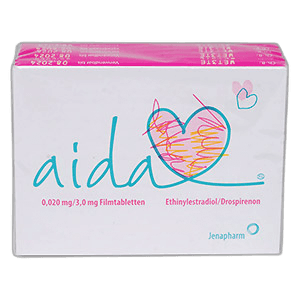
Aida
Drospirenon 3 mg, Ethinylestradiol 0,03 mg
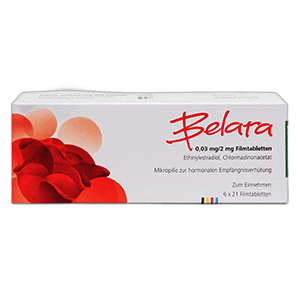
Belara
Chlormadinonacetat 2 mg, Ethinylestradiol 0,03 mg
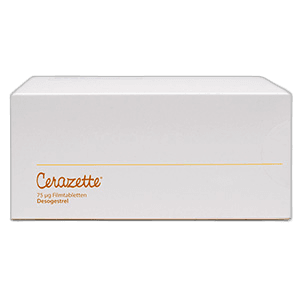
Cerazette
Desogestrel 0,075 mg
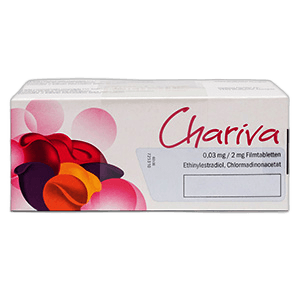
Chariva
Chlormadinonacetat 2 mg, Ethinylestradiol 0,03 mg
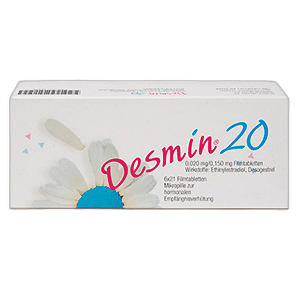
desmin
Desogestrel 0,15 mg, Ethinylestradiol 0,02 mg oder 0,03 mg

ellaOne
Ulipristalacetat 30 mg
Prevention
This section provides guidance on prevention and reducing risk factors.
Good contraceptive counseling helps avoid side effects and increase satisfaction with the chosen method.
Regular medical check-ups are important, particularly with hormonal contraceptives. If new complaints or health changes arise, the contraception should be reviewed again.
Conscious management of additional risk factors such as smoking or being overweight can help reduce potential complications.
FAQ
Here you will find answers to frequently asked questions on this topic.
Would you like a medical assessment?
Fill out the medical questionnaire. A licensed doctor will review your information and recommend a suitable therapy if appropriate.
Important notice
This content is for general information only. In case of severe pain, shortness of breath, impaired consciousness, fever > 39°C or rapidly worsening symptoms, please seek immediate medical help ().
Related treatments
More treatments from the Frauengesundheit area that might interest you.
Gesichtsbehaarung
Wir stellen ein paar gezielte Fragen, um mögliche Ursachen und passende Optionen einzuordnen.
Bakterielle Vaginose
Ein kurzer Fragebogen hilft, typische Beschwerden und mögliche Ausschlusskriterien abzufragen.
Blasenentzündung
Wir prüfen Symptome und Warnzeichen, damit eine passende Empfehlung medizinisch sicher eingeordnet werden kann.
Gardnerella vaginalis
Ein paar Fragen helfen, Beschwerden und mögliche Ursachen strukturiert einzuordnen.