
Overview
In this section you will get an overview of the condition and its relevance to your health.
Excessive facial hair in women — medically known as hirsutism — is a common but often taboo problem. Estimates suggest that up to 10 percent of women of childbearing age are affected. Visible facial hair can significantly impair self-esteem and lead to considerable distress.
Many affected women hesitate to seek medical help because they perceive the problem as cosmetic or embarrassing. In fact, hirsutism usually has a hormonal medical cause that can be specifically treated.
The good news: With the right diagnosis and modern treatment options, hair growth can often be significantly reduced. A medically supervised online consultation can be a sensible first step.
What is it?
Here you will learn what medically characterizes this condition and how it is defined.
Hirsutism refers to increased male-pattern hair growth in women. Typically, dark, coarse terminal hairs grow in areas that are normally more heavily haired in men, such as the upper lip, chin, cheeks, chest, abdomen, or back.
In most cases, the cause is an increased influence of male sex hormones, known as androgens. These may either be produced in excess, or the hair follicles may be particularly sensitive to normal androgen levels.
It is important to distinguish this from so-called hypertrichosis, which is increased hair growth independent of androgens that can affect the entire body and has different causes.
Causes
The following information explains which factors can contribute to the development of this condition.
The causes of excessive facial hair are varied, but a hormonal disorder is often the underlying factor.
Polycystic ovary syndrome (PCOS) is the most common cause of hirsutism. It involves a hormonal imbalance with elevated androgen levels. Accompanying symptoms often include menstrual irregularities, acne, or weight gain.
Increased androgen production can also be caused by diseases of the adrenal glands or ovaries. In rare cases, hormone-producing tumors may be present.
Medications such as certain anabolic steroids, corticosteroids, or antiepileptic drugs can increase hair growth.
Idiopathic hirsutism is present when increased hair growth occurs despite normal hormone levels. Here, the hair follicles are particularly sensitive to androgens.
Genetic factors also play a role, as hair distribution and density can vary between families.
Symptoms
This section describes the typical signs and symptoms you should watch for.
The cardinal symptom of hirsutism is the increased growth of dark, coarse hair on the face or other body areas.
Typically affected areas include:
- Upper lip
- Chin and jawline
- Cheeks
- Chest
- Lower abdomen
- Back
Depending on the cause, additional symptoms may occur, including:
- Acne or oily skin
- Male-pattern hair loss
- Menstrual irregularities
- Weight gain
Warning signs that may indicate a more serious hormonal disorder include sudden strong hair growth, deepening of the voice, or enlargement of the clitoris. In these cases, prompt medical evaluation is important.
Diagnosis
Below you will learn how this condition is detected through medical examinations.
The diagnosis of hirsutism begins with a detailed medical consultation. The onset, progression, and severity of hair growth as well as accompanying symptoms are assessed.
For objective evaluation, the Ferriman-Gallwey score can be used, which rates hair growth in various body regions.
An important part of the diagnostic workup includes blood tests to determine:
- Total testosterone
- Free testosterone
- DHEAS
- Additional hormones depending on clinical suspicion
Gynecological examinations or imaging studies may also be necessary to rule out diseases of the ovaries or adrenal glands.
During an online consultation, symptoms and previous findings can be recorded and assessed. Further diagnostics may be recommended if appropriate.
Treatment
Here the available therapy options and their modes of action are explained.
Treatment of hirsutism depends on the cause and the individual level of distress.
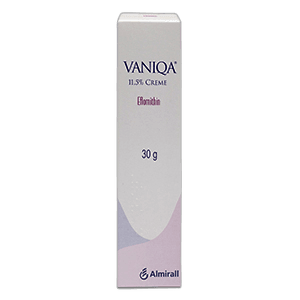
Eflornithine cream (Vaniqa) is a topical therapy that slows facial hair growth. The active ingredient inhibits an enzyme necessary for hair growth. Initial effects usually appear after 6 to 8 weeks. Common side effects include mild skin irritation.
Hormonal therapy may be beneficial when increased androgen influence is present. Combined oral contraceptives reduce androgen effects and can reduce hair growth over the long term.
Anti-androgens such as cyproterone acetate or spironolactone block the effect of male hormones on hair follicles. They are usually used in combination with reliable contraception, as they can be harmful to a developing fetus.
Cosmetic measures such as laser hair removal or electrolysis can complement medical therapy but do not replace treatment of the underlying cause.
Important contraindications arise particularly with hormonal therapies and must be individually assessed by a doctor.
Available medications
Various prescription medications are available for treatment. Click on a medication to learn more about its effects, dosage and side effects.
Prevention
This section provides guidance on prevention and reducing risk factors.
Not every form of hirsutism can be prevented, especially when genetic factors play a role.
A healthy lifestyle with a normal body weight can help lower androgen levels and alleviate symptoms in hormonal causes such as PCOS.
Early medical evaluation at the first signs can prevent hirsutism from worsening and distress from increasing.
FAQ
Here you will find answers to frequently asked questions on this topic.
Would you like a medical assessment?
Fill out the medical questionnaire. A licensed doctor will review your information and recommend a suitable therapy if appropriate.
Important notice
This content is for general information only. In case of severe pain, shortness of breath, impaired consciousness, fever > 39°C or rapidly worsening symptoms, please seek immediate medical help ().
Related treatments
More treatments from the Frauengesundheit area that might interest you.
Verhütung
Ein kurzer Check der wichtigsten Eckdaten – danach kann eine passende Option ausgewählt werden.
Bakterielle Vaginose
Ein kurzer Fragebogen hilft, typische Beschwerden und mögliche Ausschlusskriterien abzufragen.
Blasenentzündung
Wir prüfen Symptome und Warnzeichen, damit eine passende Empfehlung medizinisch sicher eingeordnet werden kann.
Gardnerella vaginalis
Ein paar Fragen helfen, Beschwerden und mögliche Ursachen strukturiert einzuordnen.