
Overview
In this section you will get an overview of the condition and its relevance to your health.
Smoking is one of the most common preventable causes of disease and premature death. Yet many people find it difficult to quit permanently. Nicotine is highly addictive -- both physically and psychologically.
Many smokers have already made several quit attempts. Relapses are not uncommon and are not a sign of weakness, but part of the learning process.
The good news: smoking cessation is possible. With a combination of motivation, behavioral change, and if necessary medication support, the chances of success can be significantly increased -- including after medical review as part of an online consultation.
What is it?
Here you will learn what medically characterizes this condition and how it is defined.
Smoking cessation encompasses all measures aimed at permanently ending tobacco use. The goal is complete nicotine freedom and the reduction of tobacco-related health risks.
Nicotine causes a rapid release of neurotransmitters in the brain that produce a short-term sense of well-being. At the same time, a strong dependence develops, causing both physical withdrawal symptoms and psychological cravings.
Successful smoking cessation addresses both aspects -- the physical dependence and the learned habits.
Causes
The following information explains which factors can contribute to the development of this condition.
The cause of smoking is nicotine dependence.
Factors that maintain smoking:
- Nicotine addiction
- Habits and rituals
- Stress coping
- Social environment
Many people reach for a cigarette in stressful situations, which makes quitting additionally challenging.
Symptoms
This section describes the typical signs and symptoms you should watch for.
Withdrawal symptoms frequently occur when quitting smoking.
Typical withdrawal symptoms:
- Intense cravings to smoke
- Irritability
- Restlessness
- Concentration difficulties
- Sleep problems
- Weight gain
These symptoms are usually temporary and subside within a few weeks.
Diagnosis
Below you will learn how this condition is detected through medical examinations.
A specific medical diagnosis is not required for smoking cessation.
However, the following are assessed during the medical consultation:
- Smoking habits
- Degree of dependence
- Previous quit attempts
- Comorbidities
As part of an online consultation, an individualized cessation plan can be created.
Treatment
Here the available therapy options and their modes of action are explained.
Smoking cessation can be supported through various measures.
Nicotine replacement therapy:
- Nicotine patches
- Chewing gums
- Lozenges
Medication therapy:
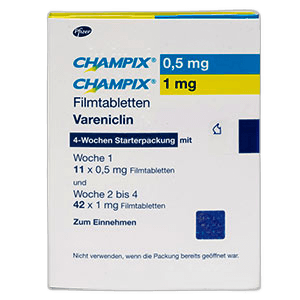
- Varenicline reduces cravings and the reward effect of nicotine.
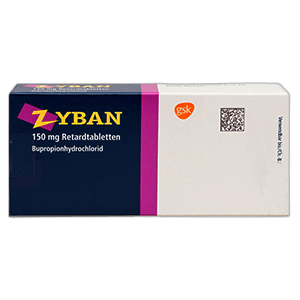
- Bupropion can reduce cravings and withdrawal symptoms.
Behavioral support:
- Counseling
- Coaching
- Apps or programs
Important notes:
- Combinations of medication and counseling are particularly effective
Available medications
Various prescription medications are available for treatment. Click on a medication to learn more about its effects, dosage and side effects.
Prevention
This section provides guidance on prevention and reducing risk factors.
The best protection against tobacco-related diseases is to never start smoking in the first place.
For former smokers: every smoke-free day improves health. Relapses should be understood as a learning step, not as failure.
FAQ
Here you will find answers to frequently asked questions on this topic.
Would you like a medical assessment?
Fill out the medical questionnaire. A licensed doctor will review your information and recommend a suitable therapy if appropriate.
Important notice
This content is for general information only. In case of severe pain, shortness of breath, impaired consciousness, fever > 39°C or rapidly worsening symptoms, please seek immediate medical help ().
Related treatments
More treatments from the Allgemeine Medizin area that might interest you.
Asthma
Wir prüfen Beschwerden und mögliche Warnzeichen, damit der nächste Schritt sicher eingeordnet werden kann.
Medizinisches Cannabis
Kurzer Check zu Beschwerden, Vorerkrankungen und bisherigen Therapien zur medizinischen Einordnung.
Allergischer Schnupfen (Heuschnupfen)
Ein kurzer Fragebogen hilft, Symptome, Auslöser und bisherige Behandlung zu erfassen.
Migräne
Wir erfassen Häufigkeit, Auslöser und Warnzeichen, um Optionen medizinisch einzuordnen.